
Connecting Customers: Best Practices for Optimizing Display Campaigns
Why Display Campaign Optimization Matters
Image metadata:
- title: Header — Optimizing Display Campaigns
- alt: Header image showing a marketer analyzing performance dashboards to optimize display campaigns
- type: image/jpeg
- placement: header
- license: Licensed for use via Bannerbear
Optimizing display campaigns is key to turning your visual advertising from a budget drain into a revenue driver. With consumers seeing thousands of ads daily, only the most strategic campaigns cut through the noise.
Here are the essential steps for optimizing display campaigns:
- Set Clear Goals
- Target Smart
- Create Compelling Ads
- Control Placements
- Leverage Automation
- Optimize Landing Pages
- Test and Measure
The stakes are high. Research shows that advertisers who upgrade to Performance Max see an average 20% increase in conversions, and adding responsive display ads can double conversion rates. Yet, many marketers struggle, as default settings can lead to over 90% of ad placements being irrelevant. Successful campaigns require moving beyond basic setup to implement advanced targeting, creative testing, and automated bidding. For marketing leaders, display advertising is a powerful tool for brand awareness and lead generation, but it demands a data-driven approach.
Want to learn more how we can help you with Google Ads?
Click here for a quick overview of our Google Ads programs.
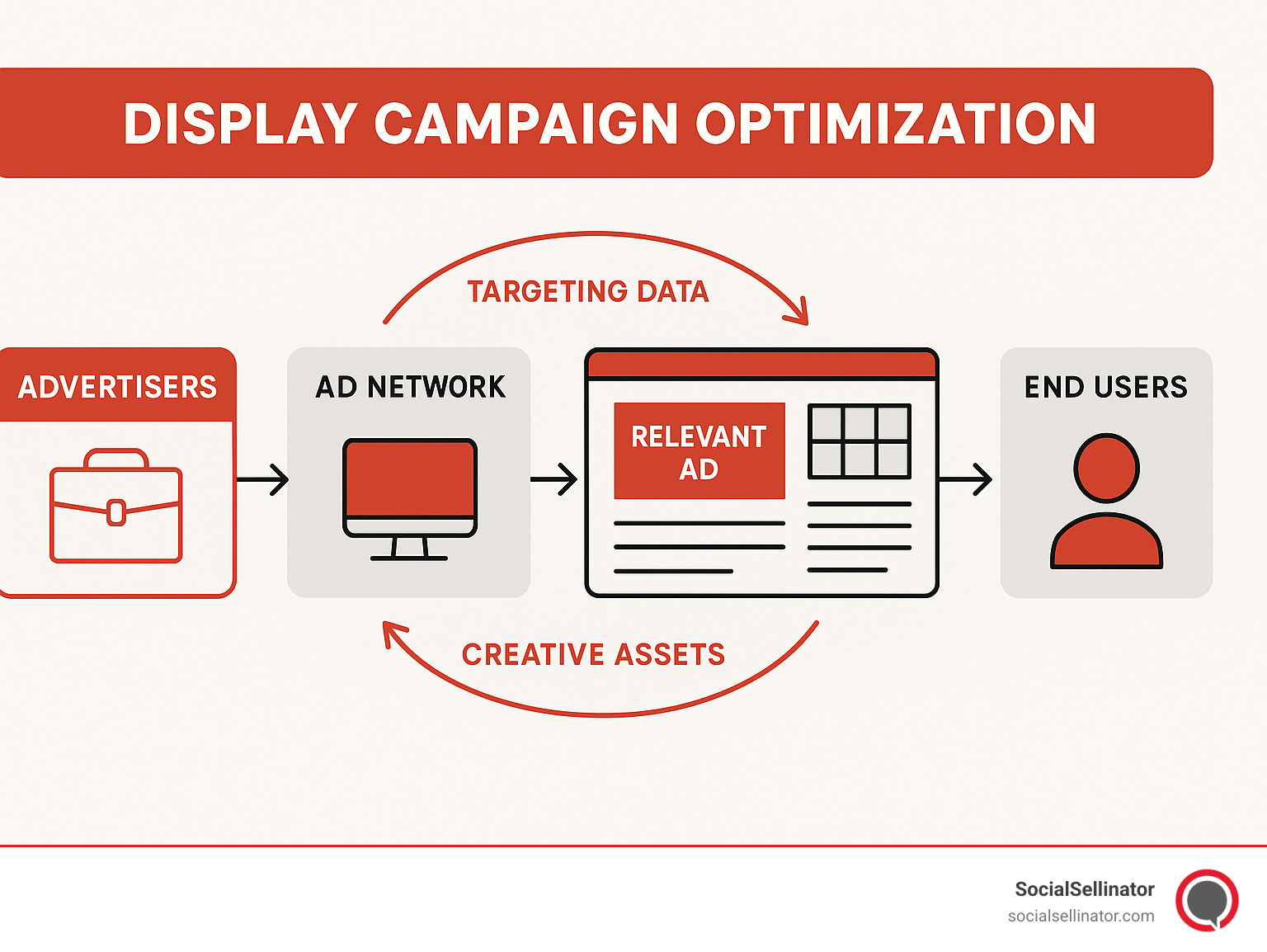
Image metadata:
- title: Display Campaign Optimization Framework
- alt: Infographic showing how audience signals and creative assets flow between advertisers, ad networks, publishers, and users for optimized display campaigns
- type: image/jpeg
- placement: inline
- license: Licensed for use via Bannerbear
Display ads are proactive, reaching users while they browse content to build brand awareness. Search ads are reactive, appearing when users actively search, indicating higher intent.
| Feature | Display Ads | Search Ads |
|---|---|---|
| Purpose | Brand awareness, lead generation, re-engagement | Immediate conversions, high-intent users |
| Format | Visual (images, video, rich media) | Text-based |
| Targeting | Interests, demographics, behavior, context | Keywords (user queries) |
| Placement | Websites, apps, videos (Google Display Network) | Search Engine Results Pages (SERPs) |
| User Intent | Passive browsing, findy | Active searching, problem-solving |
| Typical CTR | Lower (e.g., 0.5%) | Higher (e.g., 2-5% or more) |
The most powerful digital marketing strategies leverage both in synergy. Display ads introduce your brand, while search ads capture intent when it materializes.
Setting the Foundation: Goals, Budget, and Tracking
Laying a solid foundation is crucial for campaign success. This means defining what you want to achieve, how you’ll pay for it, and how you’ll measure results. Without these steps, even the most creative display ad may fail to help your business grow.
Defining Clear Campaign Objectives
Every successful display campaign begins with a clear purpose. Your goals might include boosting brand awareness, driving website traffic, lead generation, or direct sales. Set SMART goals: Specific, Measurable, Achievable, Relevant, and Time-bound. For example, a SMART goal is to “increase qualified leads by 15% through display campaigns within the next quarter.” Aligning these goals with business outcomes is crucial. In Google Ads, choosing the right campaign goal (like “Leads” or “Sales”) helps the platform’s algorithms optimize effectively.
Budgeting and Bidding Fundamentals
To maximize your budget when optimizing display campaigns, set a daily budget or a lifetime budget. Your main bidding options are:
- Cost-per-click (CPC): Pay only when someone clicks your ad. This is ideal for driving traffic or leads.
- Cost-per-mille (CPM) or vCPM (viewable CPM): Pay per thousand ad impressions. This is best for brand awareness campaigns.
Actively optimizing your bids is critical, as default settings may prioritize spending over return on ad spend (ROAS). Many advertisers start with manual bidding to gather data before transitioning to automated strategies.
The Importance of Conversion Tracking and Attribution
If you can’t measure it, you can’t improve it. Accurate conversion tracking is non-negotiable. This involves setting up tracking pixels on your website, often simplified with tools like Google Tag Manager. Regularly test your conversion tracking to ensure it’s firing correctly.
Understanding the customer journey requires looking beyond the last click. Attribution models help you understand the value of each touchpoint. A “last-click” model credits only the final interaction, while a “first-click” model credits the initial touchpoint. Advanced “data-driven” models distribute credit across all interactions, providing a clearer picture.
For display, measure value beyond clicks with Engaged-view conversions (EVCs) and View-through conversions (VTCs). EVCs track conversions after a user watches at least 10 seconds of a video ad. VTCs track conversions after a user sees an ad but doesn’t click. These metrics reveal the powerful influence of your display campaigns. Enabling GA4 auto-tagging also pulls detailed Google Ads data into your analytics for deeper insights. SocialSellinator’s PPC and analytics specialists can ensure your tracking is flawless and your data is actionable, integrating digital marketing, SEO, and paid media best practices as needed.
Core Strategies for Optimizing Display Campaigns
With a solid foundation, you can focus on the core strategies for optimizing display campaigns: refining who sees your ads, what they look like, and where they appear.
Advanced Audience Targeting and Segmentation
Reaching the right people at the right moment is paramount.
- Contextual Targeting: Place ads on topically relevant websites or apps using keyword or topic targeting.
- Audience Targeting: Reach users based on their characteristics and behaviors.
- In-market audiences: People actively researching products like yours.
- Affinity audiences: Users with a strong interest in a particular topic.
- Custom audiences: Audiences you create based on specific keywords, URLs, or apps.
- Demographic targeting: Target by age, gender, parental status, or income.
- Remarketing Strategies: Serve personalized ads to people who have already visited your website. This is a powerful, high-conversion strategy. A key tip is to exclude remarketing lists from general prospecting campaigns to keep strategies separate.
Crafting High-Performing Ad Creatives
Your ad creative is your storefront and must be compelling.
- Responsive Display Ads (RDAs): Provide headlines, descriptions, images, and logos, and Google’s machine learning assembles them to fit any ad space. Advertisers see 2x conversions, on average, by adding an RDA.
- Compelling Visuals: Use high-quality, uncluttered images with good color contrast.
- Clear Value Proposition: Ad copy must concisely communicate the user’s benefit.
- Strong Call-to-Action (CTA): Use a clear, specific CTA button that stands out.
- Social Proof: Include testimonials, reviews, or awards to build trust.
- Brand Authenticity: Maintain consistent branding across all ads and landing pages.
- A/B Testing: Continuously test different creative elements to iterate and improve.
Strategic Placement, Device, and Content Control
Refining where and on what devices your ads appear is critical for preventing wasted spend and ensuring brand safety.
- Content Exclusions: Strategically exclude placements that underperform or don’t align with your brand.
- Exclude Mobile App Categories: For most businesses, ads in mobile apps (especially games) generate low-quality traffic from accidental clicks. Exclude these categories to prevent wasted budget.
- Negative Keywords: Use negative keywords to prevent ads from showing on irrelevant content.
- Exclude Suspicious Sites: Filter and exclude placements with abnormally high CTRs, which may indicate bot traffic.
- Device Targeting: Analyze performance by device (mobile, tablet, desktop) and apply bid adjustments. If desktop leads to higher-value conversions, increase bids there.
- Mobile-Friendliness: Ensure your ads and landing pages are responsive and look good on all screen sizes.
- Location Targeting: Focus your budget on your most valuable geographic areas.
- Ad Scheduling (Dayparting): Run ads only during specific hours or days when your audience is most likely to convert.
Leveraging Automation and Smart Bidding
AI in marketing and machine learning allow us to optimize campaigns at a scale and speed impossible to achieve manually. These tools are essential for optimizing display campaigns.
Understanding Google’s Smart Features
Google’s AI-powered features help you reach advertising goals more efficiently. The core of this is Smart Bidding, a suite of automated strategies that use machine learning to optimize for conversions in real-time. Key options include:
- Target CPA (Cost-Per-Action): Sets bids to get as many conversions as possible at your target average cost.
- Target ROAS (Return On Ad Spend): Optimizes bids to maximize conversion value while aiming for your target return.
- Maximize Conversions: Automatically sets bids to get the most conversions within your budget.
- Maximize Conversion Value: Focuses on getting the highest total conversion value within your budget.
These systems analyze vast amounts of data—device, location, time of day, audience signals—to predict conversion likelihood and adjust bids instantly. To be effective, they require accurate conversion data, which is why proper tracking is so crucial. When a campaign starts, it enters a “learning phase” to gather data. Avoid drastic changes during this period. To scale, use modest budget increases (10-20%) to avoid disrupting the algorithm.
Responsive Display Ads and Performance Max
Responsive Display Ads (RDAs) are a prime example of creative automation. You provide assets (images, headlines, descriptions), and Google’s AI mixes and matches them to create ads that fit any space. This includes asset improvements and auto-generated videos, leading to richer ad experiences and often doubling conversions.
Performance Max campaigns are Google’s most comprehensive automated campaign type. They are designed to maximize conversions across all of Google’s channels—Search, Display, YouTube, Gmail, and more—from a single campaign. Upgrading display campaigns to Performance Max can significantly boost results, with many advertisers reporting an average conversion increase of over 20% at a similar CPA.
Measuring Success: Landing Pages, Testing, and Analytics
Constant measurement, testing, and refinement are necessary to ensure your ads lead to a stellar experience and deliver real results.
The Crucial Role of Landing Page Optimization
Landing page optimization is critical. Your ad grabs attention, but the landing page is where you secure the conversion. A poor landing page experience wastes your ad spend. Key elements include:
- Message Match: The landing page content, offer, and visuals must be a seamless continuation of the ad to build trust.
- Mobile-First Design: Your page must look great and function perfectly on smaller screens.
- Page Load Speed: Slow pages kill conversions. Ensure your pages load quickly.
- Simple Forms: For lead generation, only ask for essential information to reduce friction.
- Consistent Branding: The landing page should visually match your ad and overall brand identity.
A/B Testing for Optimizing Display Campaigns
A/B testing allows you to scientifically compare two or more versions of an ad or page to see which performs better. To implement it effectively:
- Test one variable at a time (e.g., just the headline or just the image) for clear results.
- Run tests long enough to gather statistically significant data.
- Test everything: Test ad creatives (images, headlines, CTAs), targeting (audiences, placements), and landing pages (layouts, offers).
- Analyze results based on key performance indicators (KPIs) like conversion rate and CPA, not just clicks.
Continuous optimization is the goal. A/B testing is an ongoing cycle of testing, learning, and improving your campaigns.
Key Metrics for Optimizing Display Campaigns
Track these key metrics to measure the performance of your efforts in optimizing display campaigns:
- Click-Through Rate (CTR): The percentage of impressions that result in a click.
- Conversion Rate: The percentage of clicks that result in a desired action.
- Cost Per Action (CPA): How much you pay for each conversion.
- Return On Ad Spend (ROAS): The revenue generated for every dollar spent on ads.
- Impressions: The total number of times your ad was shown.
- Clicks: The total number of times your ad was clicked.
- View-Through (VTC) & Engaged-View (EVC) Conversions: These are crucial for display. VTCs track conversions from users who saw your ad but didn’t click, while EVCs track conversions after a user watches part of your video ad. They reveal the broader influence of your campaigns.
Want to learn more about how we can help you with Google Ads?
Click here for a quick overview of our programs.
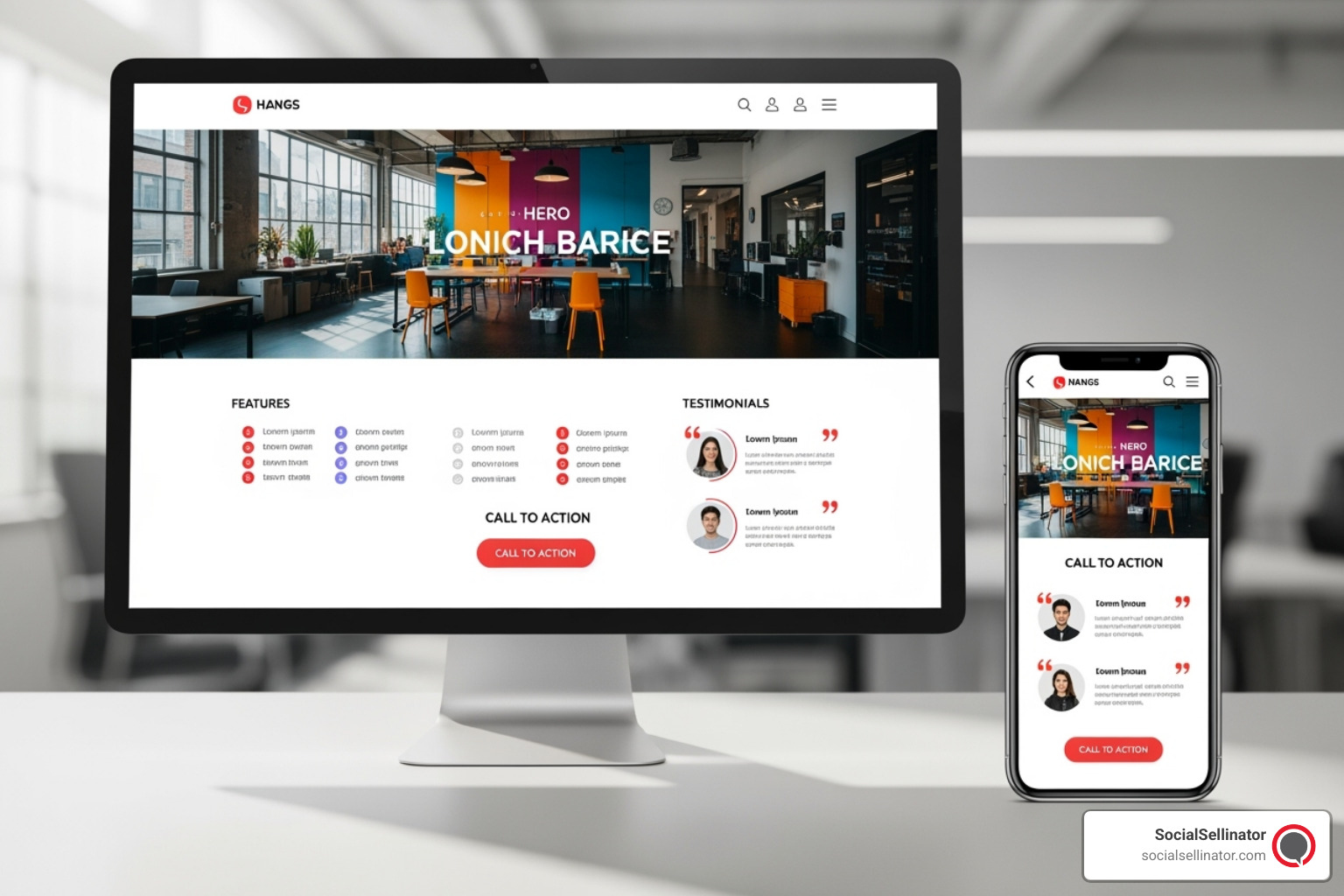
Image metadata:
- title: Responsive Landing Page for Display Campaigns
- alt: Desktop and mobile views of a responsive landing page highlighting clear headlines, concise forms, and strong calls-to-action
- type: image/jpeg
- placement: inline
- license: Licensed for use via Bannerbear
Regularly analyzing ad performance is crucial, even with automation, to spot trends and identify new opportunities.
The Future of Display Advertising
The display advertising landscape is rapidly evolving, driven by privacy concerns and new technology. Staying ahead of these shifts is crucial for optimizing display campaigns.
The most significant change is the third-party cookie phase-out. Marketers must adapt to new technologies like Google’s Privacy Sandbox and the Protected Audience API, which enables remarketing without tracking individuals across sites. This shift accelerates the move toward privacy-centric advertising. Regulations like GDPR and CCPA are reshaping data use, encouraging a focus on valuable and reliable first-party data that customers share willingly.
A cross-platform advertising strategy is now essential. Consumers follow complex paths to purchase, interacting with brands on multiple devices and channels. Campaigns must work seamlessly across display, search, social, and email. Shoppers targeted with both display ads and marketing emails are twice as likely to convert.
Mobile gaming advertising offers access to a massive, engaged audience. However, ads must improve, not disrupt, the gaming experience. For example, avoiding intrusive elements like loud auto-playing audio is critical.
Finally, evolving consumer behavior demands more from advertisers. The rise of video content, interactive formats, and high expectations for personalization mean ads must be relevant, timely, and helpful, not generic or pushy. Businesses that accept these changes will gain a significant competitive advantage.
Conclusion: Drive Growth with Optimized Campaigns
Optimizing display campaigns is not a one-time task but a continuous process of refinement. Strategic adjustments can transform your visual advertising from a cost center into a powerful revenue driver.
Success hinges on four pillars: strategic targeting to reach the right audience, compelling creative to capture attention, smart bidding to maximize ROI, and diligent measurement for data-driven decisions. When display ads work in concert with your broader search, social, and email marketing efforts, you create a comprehensive strategy that drives true, long-term growth.
Feeling a bit overwhelmed, or simply want to fast-track your success? For expert help in optimizing display campaigns and maximizing your PPC results, consider partnering with the specialists at SocialSellinator.
Headquartered in San Jose, in the heart of Silicon Valley and the San Francisco Bay Area, SocialSellinator proudly provides top-tier digital marketing, SEO, PPC, social media management, and content creation services to B2B and B2C SMB companies. While serving businesses across the U.S., SocialSellinator specializes in supporting clients in key cities, including Austin, Boston, Charlotte, Chicago, Dallas, Denver, Kansas City, Los Angeles, New York, Portland, San Diego, San Francisco, and Washington, D.C.
- About the Author
- Latest Posts

Claude Prevost is the Marketing Director at Social Sellinator, bringing over 20 years of digital marketing expertise to help businesses increase their digital footprint. Specializing in Google Ads, SEO, and LLM optimization, he is a Google Certified Professional who has successfully driven growth for over 200 companies. Discover more of his insights at Social Sellinator or explore his complete blog archive.


