

Social Media Management 101
What Is Social Media Management and Why It Matters for Your Business
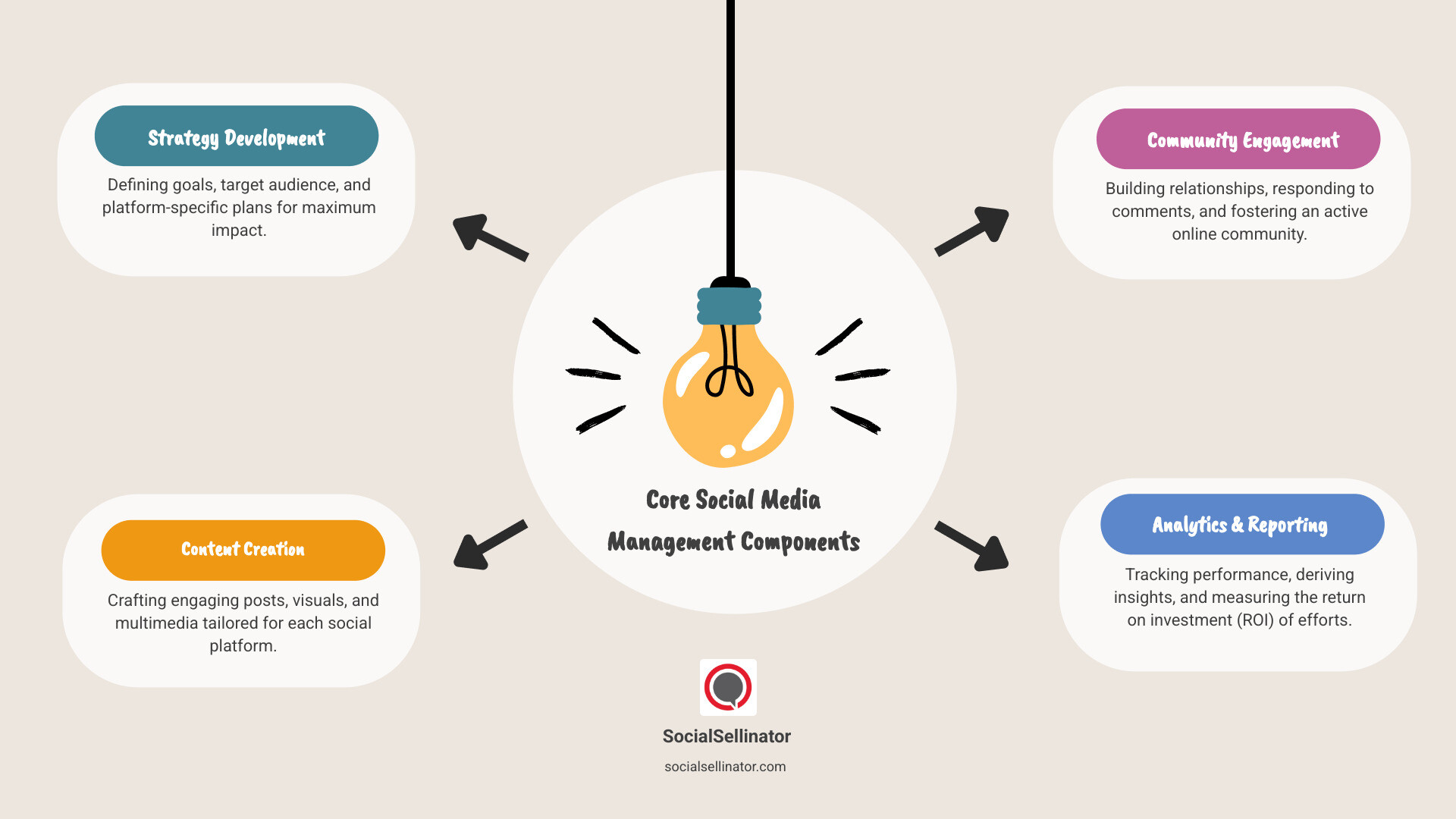
Social Media Management is the strategic process of creating, scheduling, analyzing, and engaging with content on platforms like Facebook, Instagram, and LinkedIn. It’s not just about posting updates; it’s a comprehensive approach to building meaningful connections with your audience and driving real business results. This discipline transforms a brand’s social presence from a collection of random posts into a strategic growth engine. It involves developing a clear strategy rooted in business objectives, creating engaging and platform-specific content, managing community interactions with a focus on relationship building, analyzing performance data to refine tactics, and running targeted paid advertising campaigns to accelerate growth.
Many business owners struggle to see a real return on investment (ROI) from their social media efforts because they focus on vanity metrics like likes and followers. True success lies in turning connections into customers, building trust, and creating a loyal community around your brand. Without a strategic framework, posts can feel disjointed and fail to contribute to larger goals. Professional management provides the structure and authentic engagement needed to drive qualified leads, increase conversions, and generate measurable revenue.
The Importance for Modern Businesses
Effective Social Media Management is a necessity, not an option. With a vast majority of consumers using social media to follow brands, your target audience is actively seeking engagement. A strong social media presence makes your brand visible where customers spend their time, serving as a powerful engine for lead generation and product research. It allows a business to showcase its personality, differentiate itself from competitors, and build a narrative that resonates with its ideal customers.
Beyond visibility, social media is a critical customer service channel. Customers expect prompt, helpful responses, and positive interactions build trust and loyalty, leading to valuable recommendations and repeat business. This direct line of communication is vital for reputation management and fostering strong customer relationships. Consistent, strategic engagement on social platforms contributes directly to the bottom line by driving qualified website traffic, increasing revenue, and providing invaluable customer insights that inform broader business and digital marketing strategies.
Defining the Scope
Comprehensive Social Media Management goes far beyond simple posting. It begins with a robust content strategy that dictates the themes, messaging, and formats that will resonate with your audience. This guides the creation of platform-specific content, from insightful blog posts and compelling videos to eye-catching graphics. Another vital component is reputation management, which involves actively monitoring brand mentions and sentiment to maintain a positive brand image and address feedback proactively. Community management is equally crucial for fostering genuine connections by responding to comments and messages, initiating conversations, and turning followers into brand advocates. In a competitive landscape, paid social ads and PPC campaigns play a significant role in expanding reach, targeting specific demographics, and driving conversions. Finally, analytics and reporting are indispensable for tracking key performance indicators (KPIs), measuring effectiveness, and demonstrating tangible ROI through a continuous cycle of planning, execution, and optimization.
The Modern Social Media Manager: Roles, Responsibilities, and Skills
A modern social media manager is the Swiss Army knife of digital marketing—part strategist, creative director, customer service representative, and data scientist. The role has evolved from simply posting updates to a sophisticated function at the heart of business strategy. These professionals are the bridge between a brand and its customers, managing relationships, reputations, and revenue streams. They are responsible for crafting digital experiences that capture attention, foster loyalty, and turn casual scrollers into dedicated brand advocates.
Core Responsibilities and Daily Tasks
A social media manager’s day is a dynamic mix of big-picture strategy and hands-on execution. Strategy development is the foundation, involving the alignment of social media activities with overarching business goals. This means defining target audience personas, conducting keyword research, and mapping out how each post or campaign contributes to objectives like lead generation or brand awareness. This strategic plan acts as a roadmap for all other activities.
Content creation is where creativity meets strategy. A manager writes compelling captions, edits videos for platforms like TikTok and Reels, and designs scroll-stopping graphics, tailoring content for each platform while maintaining brand consistency. Community management is the human element of the job, involving both reactive and proactive engagement. This includes responding to comments, answering direct messages, and actively participating in industry conversations to build relationships and establish authority.
A significant portion of their time is spent in analytics mode, diving into performance data to track what works, identify trends, and inform future strategy. This data-driven approach separates professional management from random posting. They also conduct thorough competitor analysis to benchmark performance, identify content gaps, and monitor trends to keep the brand relevant and ahead of the curve.
Essential Skills for Success
Successful social media managers possess a unique blend of skills. Strategic thinking is paramount; they must see how daily activities support long-term business objectives. This is crucial whether you’re a B2B company in Austin seeking qualified leads or a B2C brand in Los Angeles building loyalty. They must be able to translate business goals into a tangible social media plan.
Versatile communication skills are essential for mastering the brand voice while adapting the tone for different platforms and situations, from a professional LinkedIn post to a playful Instagram Story. The creative spark is what makes content memorable, but it’s a strategic creativity that serves business goals. Analytical prowess is needed to translate metrics into actionable insights, turning data into decisions about what the audience truly wants and how to optimize for better results.
Adaptability is perhaps the most critical skill, as social media platforms and algorithms are constantly changing. A great manager sees these changes not as obstacles but as opportunities to innovate. Understanding SEO principles helps create content that supports broader digital marketing efforts, improving discoverability on and off the platform. Customer service expertise turns potential issues into positive brand moments. Finally, strong project management skills keep content calendars, campaigns, and stakeholder expectations on track, ensuring quality, consistency, and timely execution.
At SocialSellinator, our team combines these essential skills with proven strategies to deliver Social Media Management that drives real business results for companies in key markets like Chicago, Dallas, and San Francisco.
The Evolution of Social Media Management: Trends and the Rise of AI
Social Media Management has evolved dramatically from its early days of simply collecting followers. The focus has shifted from broadcasting updates to building genuine relationships and fostering communities. Businesses realized that a thousand engaged customers are more valuable than ten thousand silent followers, leading to a new era of authentic conversation and community building where value exchange is paramount.
Key changes have reshaped the landscape. The rise of social commerce turned platforms like Instagram and Facebook into complete sales funnels, allowing users to discover, research, and purchase products without ever leaving the app. Communication also shifted, with more interactions moving to private messaging, creating opportunities for deeper, one-on-one brand connections. The explosion of short-form video content, popularized by TikTok and adopted by Instagram Reels and YouTube Shorts, fundamentally changed how content is consumed and created, demanding quick, attention-grabbing, and entertaining videos. Finally, the demand for authenticity has made user-generated content, behind-the-scenes glimpses, and real stories more valuable than overly polished corporate messages.
This constant evolution is why effective Social Media Management requires continuous adaptation and strategic foresight. What works today may not work tomorrow, making agility a core requirement.
Current Social Media Trends
Understanding current trends is crucial for effective social media strategy. Short-form video continues to dominate across platforms like Instagram Reels and YouTube Shorts, offering a powerful way to convey personality, educate audiences, and reach new users through algorithm-driven discovery. Social commerce integration is making it easier than ever to turn engagement into immediate sales, with features like in-app checkout and product tagging becoming standard. The creator economy has also become a major force, with businesses partnering with influencers and creators to gain trusted endorsements and access their dedicated followings.
Brands are also finding success with niche community building, focusing on smaller, highly engaged groups around specific interests for better conversion rates and deeper loyalty. AI-powered personalization delivers highly relevant content and ads to users, enabling more effective and efficient campaigns. Lastly, ephemeral content like Instagram Stories remains popular for its authentic, in-the-moment feel, perfect for polls, Q&As, and behind-the-scenes content.
The Transformative Role of Artificial Intelligence (AI)
Artificial Intelligence (AI) has quietly revolutionized Social Media Management, amplifying human creativity and automating tedious tasks. A vast majority of marketing leaders now consider AI skills essential for their teams, as these tools provide a significant competitive advantage.
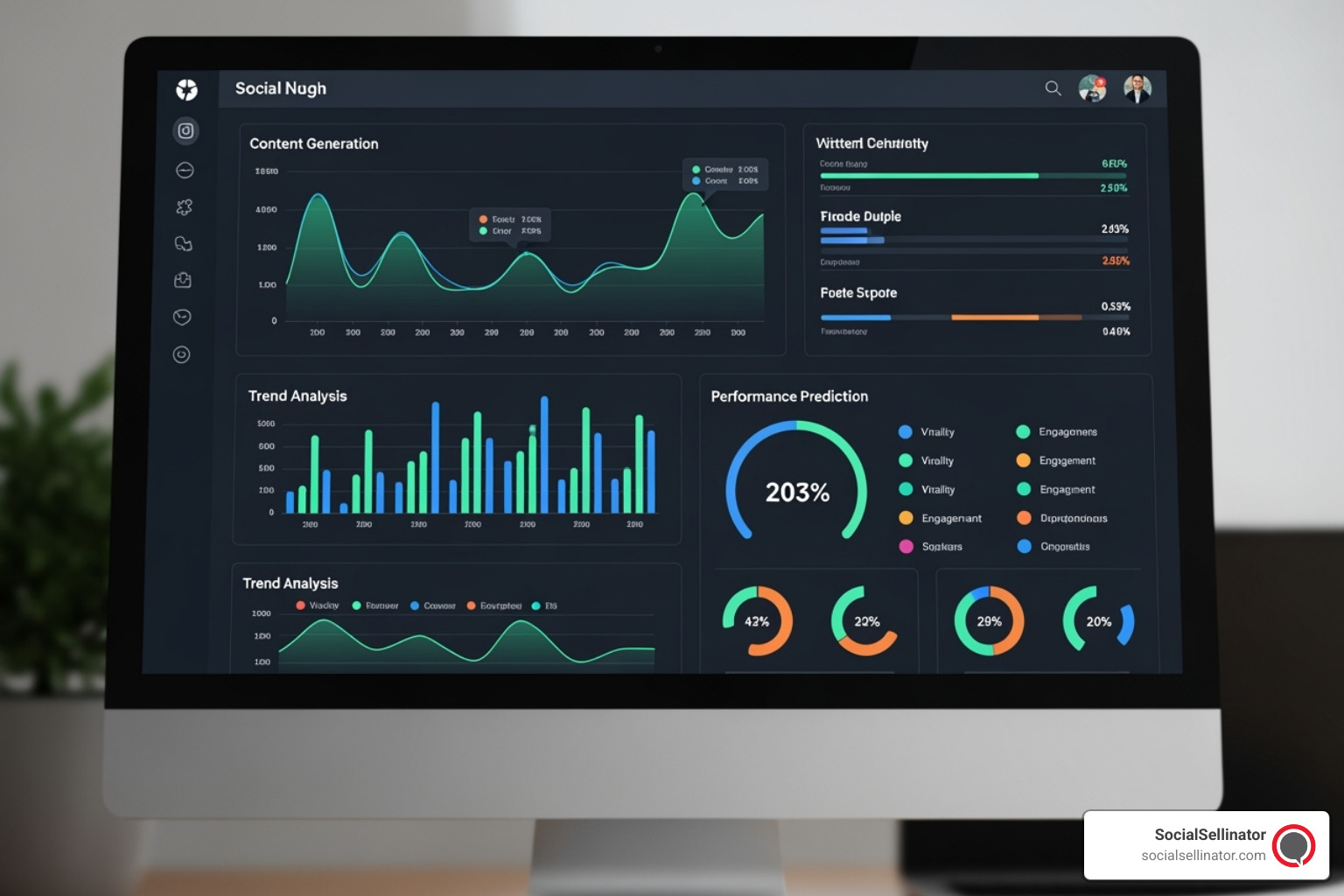
AI tools have transformed content creation by generating ideas, suggesting topics, and assisting with caption writing to maintain a consistent brand voice. AI-powered hashtag recommendations and automated scheduling optimize posts for maximum reach and engagement based on historical audience behavior and platform trends. One of the most valuable applications is sentiment analysis, which monitors brand mentions and identifies the tone of conversations in real-time, allowing for proactive reputation management and swift customer service responses. Predictive analytics helps businesses stay ahead of trends by forecasting content performance, while chatbot integration enables 24/7 customer service, answering common questions and qualifying leads even outside of business hours.
At SocialSellinator, we leverage these AI capabilities to deliver more efficient and effective services. AI handles data processing, freeing our team to focus on strategy, creativity, and building genuine connections with your audience.
Essential Tools and Platforms for Effective Management
Managing multiple social media accounts without the right tools can be chaotic and inefficient. Social Media Management platforms are essential for any serious business, transforming disorder into clarity and strategic control. They provide a centralized dashboard that brings all your accounts, messages, and analytics into one place, creating a streamlined workflow that saves hours each week. These tools make it effortless to maintain a consistent brand presence across all channels by ensuring brand voice and visual identity are uniform. Furthermore, they dramatically improve team collaboration by allowing multiple users to work together seamlessly.
Perhaps most importantly, professional tools provide improved analytics that go far beyond the basic metrics offered by individual platforms. Instead of manually piecing together data from multiple sources, you get comprehensive, cross-channel insights that help you make better, data-driven decisions about your social media strategy and prove its value to stakeholders.
Key Features to Look for in a Tool
Not all management tools are created equal. Knowing which features matter is key to choosing the right solution. Multi-platform scheduling is a non-negotiable, allowing you to plan, customize, and schedule content for Facebook, Instagram, LinkedIn, and more from a single interface. A unified social inbox is another game-changer, consolidating all comments, mentions, and direct messages into one feed to ensure you never miss an important customer interaction. This is critical for timely engagement and customer service.
Advanced analytics and reporting separate professional tools from basic ones. Look for detailed performance metrics, competitor benchmarking, and custom reporting options that provide actionable data. Social listening capabilities are also crucial for reputation management, as they monitor mentions of your brand, keywords, and competitors across the web. Modern tools often include content creation and curation features, such as design aids, content libraries, and AI-powered caption generators, to boost productivity. For teams, collaboration features like approval workflows, task assignments, and internal notes are essential for smooth operations and quality control.
In-House vs. Agency: Making the Right Choice
The decision to handle Social Media Management in-house or partner with an agency is a critical one with long-term implications. Building an in-house team offers complete control and deep company culture integration. However, it requires a significant investment in hiring a diverse team with specialized skills in content creation, graphic design, video editing, analytics, and paid advertising. This can be a slow and expensive process.
There are also challenges with resource availability, as an in-house team needs access to expensive professional tools and ongoing training to keep up with the ever-changing social media landscape. When you factor in salaries, benefits, software subscriptions, and management time, a dedicated in-house team can be very costly, especially for small to medium-sized businesses.
This is where partnering with an agency like SocialSellinator often makes more sense. You gain immediate access to a full team of specialists with deep platform expertise and cutting-edge tools without the overhead of hiring. Our team includes experts in digital marketing, SEO, and PPC, providing a comprehensive, integrated approach that is difficult to replicate in-house. Scalability is another major advantage; an agency can adapt services as your business grows or your needs change. For many businesses, an agency partnership provides a better, more predictable ROI and allows internal teams to focus on their core business functions.
Crafting a Winning Strategy: Best Practices and Measuring ROI
Building a successful Social Media Management strategy requires a solid blueprint, not guesswork. It begins with setting crystal-clear, measurable goals using a framework like SMART (Specific, Measurable, Achievable, Relevant, Time-bound). Whether you aim to boost brand awareness by 20%, generate 50 qualified leads per month, or improve customer support response times, your goals will guide every decision. The next step is understanding your audience on a deep level—their pain points, motivations, interests, and online habits. This insight, often developed through market research and creating detailed buyer personas, shapes everything from your content’s tone to your choice of platforms.
Many businesses fail by using a one-size-fits-all approach. Platform-specific strategies are essential, as content that works on professional LinkedIn will not resonate on entertainment-focused TikTok. Your content mix should be balanced, following the 80/20 rule: 80% valuable, educational, or entertaining content that serves your audience, and only 20% promotional content that directly pushes your business. This builds trust and keeps your audience engaged. Finally, integrating paid and organic efforts creates a powerful synergy that amplifies reach and accelerates results while maintaining authentic engagement.
Best Practices for Managing Multiple Platforms
Managing multiple platforms can feel like a juggling act, but a coordinated approach maximizes your impact. The key is to maintain a consistent brand voice so your brand feels familiar everywhere, even if the tone is adapted for each platform’s unique culture. However, consistency does not mean copying and pasting. Creating custom content for each platform is where the magic happens. A single core message or piece of content can be strategically adapted into an Instagram carousel, a short TikTok video, a detailed LinkedIn article, or a Twitter thread.
A detailed content calendar is your best friend for staying organized, ensuring a steady flow of content, and planning ahead for key dates. It also enables batching content creation, a time-saving technique where you produce multiple posts in one dedicated session. It’s also vital to engage uniquely with each community, understanding the different communication styles and expectations of each platform. Smart cross-promotion strategies can multiply your efforts without feeling spammy, such as teasing a new YouTube video with a behind-the-scenes clip in an Instagram Story to add value at each touchpoint.
How to Measure the ROI of Your Social Media Management
Likes and shares feel good, but they don’t pay the bills. Measuring the true ROI of your Social Media Management means connecting digital interactions to tangible business outcomes. This starts with tracking the right Key Performance Indicators (KPIs) that align with your specific goals. For brand awareness, track engagement metrics like comments and shares, along with reach, impressions, and share of voice. To measure lead generation, focus on website traffic from social media, click-through rates (CTR) on links, and the number of form submissions or downloads.
For direct sales impact, conversion rates are crucial. How many social visitors make a purchase? By implementing tracking pixels and using UTM parameters, you can attribute sales directly to your social efforts. Tracking the Cost Per Acquisition (CPA)—how much you spend to gain a customer through social channels—allows you to calculate a clear, dollar-and-cents ROI. At SocialSellinator, our comprehensive analytics and reporting services translate these numbers into actionable insights. Our expertise in digital marketing and SEO ensures we track the metrics that matter most to your bottom line, changing social media from a marketing expense into a proven revenue driver.
Understanding Social Media Management Pricing
Navigating Social Media Management pricing can be complex. Most agencies work with monthly retainers, which provide a predictable budget for ongoing strategy, content creation, community management, and reporting. The cost of a retainer depends on factors like the number of platforms managed, the volume and type of content created (e.g., video vs. static images), and the complexity of campaigns, especially those including paid social advertising.
Project-based fees are suitable for specific initiatives with clear start and end dates, like a social media audit, a competitive analysis, or a product launch campaign. Many businesses opt for customized service packages that combine different services to fit their unique needs and goals. The final investment is influenced by your business size, industry, competitive landscape, and growth objectives. Effective pricing should always reflect the value and results you receive, not just the time spent posting.
Conclusion: Partnering for Social Media Success
The digital marketing landscape has shifted, placing strategic Social Media Management at the heart of successful business growth. We’ve moved from simple posting and vanity metrics to sophisticated, AI-powered campaigns that can predict customer behavior and optimize content in real-time. The businesses thriving today understand that social media is about creating meaningful connections and providing tangible value, which in turn translates into measurable business results like leads, sales, and customer loyalty.
The complexity of managing platform-specific strategies, ever-changing algorithms, daily community engagement, and in-depth performance data can be overwhelming for any business. Effective management requires a rare combination of strategic thinking, creative execution, analytical skill, and technological proficiency. The rise of AI has further changed the game, making it essential for teams to leverage technology for content creation, scheduling, and analysis to stay competitive.
This is why a strategic partnership can be a game-changer. At SocialSellinator, we’ve seen firsthand how professional Social Media Management transforms businesses, leading to improved lead generation, stronger customer relationships, and measurable revenue growth. Our approach combines the strategic depth of experienced professionals with the latest technology, providing integrated solutions that include content creation, SEO optimization, and PPC campaigns. We believe in transparency, ensuring you always understand how your investment translates into business results. The future of social media requires expertise, dedication, and the right partnership to engage with your customers authentically and effectively.
Headquartered in San Jose, in the heart of Silicon Valley and the San Francisco Bay Area, SocialSellinator proudly provides top-tier digital marketing, SEO, PPC, social media management, and content creation services to B2B and B2C SMB companies. While serving businesses across the U.S., SocialSellinator specializes in supporting clients in key cities, including Austin, Boston, Charlotte, Chicago, Dallas, Denver, Kansas City, Los Angeles, New York, Portland, San Diego, San Francisco, and Washington, D.C.