
Why Branding in Media Matters More Than Ever
Branding in media is how your business shows up and connects with people across digital platforms—it’s the consistent personality, values, and story you tell through social media, content, and every online interaction. When more than 5 billion people use social media monthly, your brand isn’t just competing for attention—it’s fighting to be remembered, trusted, and chosen.
Quick Answer: What is Branding in Media?
- Definition: Creating a unique, consistent brand identity across all media channels (social platforms, content, digital touchpoints)
- Core Purpose: Differentiate your business and build genuine connections with your audience
- Key Components: Brand voice, visual consistency, storytelling, values, and community engagement
- Why It Matters: 81% of consumers say they must trust a brand before buying, and 89% purchase from brands they follow on social media
- The Challenge: 90% of consumers expect a similar experience across all channels—inconsistency kills trust
If you’re a marketing leader at a small or midsize business, you know the frustration. You’re juggling multiple platforms, trying to maintain a consistent presence, and watching competitors somehow connect better with your shared audience. The reality? Your brand isn’t just your logo or your product anymore. It’s every post, every comment response, every piece of content you create.
The digital landscape has fundamentally changed how brands work. Traditional one-way advertising has given way to two-way conversations. Consumers don’t just want to buy from you—they want to know you. They research brands on social media before making decisions (85% of them, according to recent data). They expect authenticity, not sales pitches. They can smell inauthenticity from a mile away.
This shift means branding in media isn’t optional—it’s essential. Your brand needs a heartbeat. It needs purpose beyond profit. It needs to stand for something that resonates with real people facing real problems.
The good news? Building a brand with heart doesn’t require massive budgets or celebrity partnerships. It requires clarity, consistency, and genuine commitment to serving your audience. It means showing up with the same values and voice whether someone finds you on LinkedIn, Instagram, or your website. It means telling stories that matter and creating content that helps, not just sells.
This guide will walk you through everything you need to build and sustain a powerful media brand—from defining your core identity to measuring what’s actually working. We’ll cover the practical elements (logos, colors, voice) and the strategic imperatives (platform selection, content planning, crisis management). Most importantly, we’ll show you how to create a brand that people actually want to engage with, follow, and ultimately buy from.
What is Media Branding and Why is it Crucial Today?
Media branding is the strategic process of creating and maintaining a distinct identity for your business across all digital and traditional media channels. It’s about more than just your logo; it’s the sum total of how your audience perceives you, influenced by every interaction, piece of content, and visual element they encounter. In today’s digitally saturated world, where countless brands clamor for attention, media branding is not just crucial—it’s foundational to survival and growth.
Why is it so important? Firstly, it enables brand differentiation. In a crowded marketplace, a strong media brand helps you stand out from the noise. It carves out a unique space in the consumer’s mind, making your offerings memorable. Secondly, it fosters customer trust. A remarkable 81% of consumers say it’s important that they trust the brands they buy from. Consistent, authentic branding builds that trust, signaling reliability and genuine commitment. Finally, effective media branding drives brand recognition, allowing your target audience to instantly identify and recall your business, which is a significant step towards loyalty and purchasing decisions.
To better understand the landscape, let’s look at the different types of brands:
| Brand Type | Focus | Key Characteristic | When Most Effective |
|---|---|---|---|
| Personal Brand | An individual’s reputation, expertise, and unique perspective. | People trust humans over logos. | Influencers, thought leaders, solo entrepreneurs. |
| Corporate Brand | The overall identity of a company, often product or service-centric. | Relies on product/service quality; content often product-focused. | Established businesses, product companies. |
| Media Brand | Content-first approach, often built separately from a core product. | Offers value beyond products; builds affinity through content. | Businesses aiming for demand generation, thought leadership. |
Understanding these distinctions helps marketing leaders and branding teams choose the right approach, whether they are shaping the public presence of a founder, scaling a product-focused company, or building a content-led media property that supports wider digital marketing goals.
The Evolution of Branding in the Digital Age
The shift from traditional to digital branding has been monumental. A decade ago, many companies heralded a “new golden age of branding” with the rise of major social platforms and online video. They invested heavily in digital presence, hiring creative teams and technologists to spread their brands across the digital universe. Yet many of these early efforts had very little payoff.
This isn’t because digital branding failed; rather, it evolved. The initial phase was often about simply being present. Today, it’s about meaningfully engaging. Social media platforms transformed traditional one-way advertising into dynamic, two-way conversations. This fosters genuine audience engagement and makes brands far more accessible than ever before. Consumers are no longer passive recipients of messages; they are active participants, co-creators, and critics.
As a result, modern branding in media must prioritize interaction and authenticity. With the vast majority of consumers using social platforms to research brands before they buy, these channels have become central to the customer journey. For agencies like SocialSellinator that specialize in digital marketing, this evolution means weaving together SEO, content, social media management, and paid campaigns (such as PPC) into a cohesive, conversation-driven brand presence.
Differentiating Brand Types: Personal, Corporate, and Media
Let’s dive a bit deeper into the nuances of brand types, as understanding these distinctions is key to effective branding in media.
Personal Brands are built around an individual’s reputation, expertise, and unique perspective. Think of well-known influencers or industry experts whose names carry authority. These brands thrive on authenticity and the direct connection people feel with another human. For businesses, elevating internal thought leaders—such as a CEO, founder, or subject-matter expert—can humanize the company and create a powerful, trust-building presence across channels.
Corporate Brands represent the overall identity of a company. These are the recognizable business names whose branding often revolves around the quality of their products or services. Their content typically centers on what they sell, their differentiators, and the outcomes they deliver. While crucial, focusing solely on a corporate brand can limit your reach to the relatively small percentage of the market that is actively shopping for your solution right now.
Media Brands, on the other hand, are built around content that provides value, entertainment, or information, separate from any specific product or service. While products or services can be discussed within their content, the media itself exists as its own entity—think of a niche newsletter, a podcast series, or a video channel that audiences follow primarily for its insights or stories.
The power of a media brand lies in its ability to build affinity with a wider audience by consistently delivering valuable content. This approach allows businesses to build relationships and generate demand long before a purchasing decision is made. For SocialSellinator clients, this might mean developing a content hub, a resource-rich blog, or a recurring video series that aligns with SEO strategy, social media distribution, and paid amplification to create continuous touchpoints with both current and future buyers.
The Core Elements of a Powerful Media Brand Identity
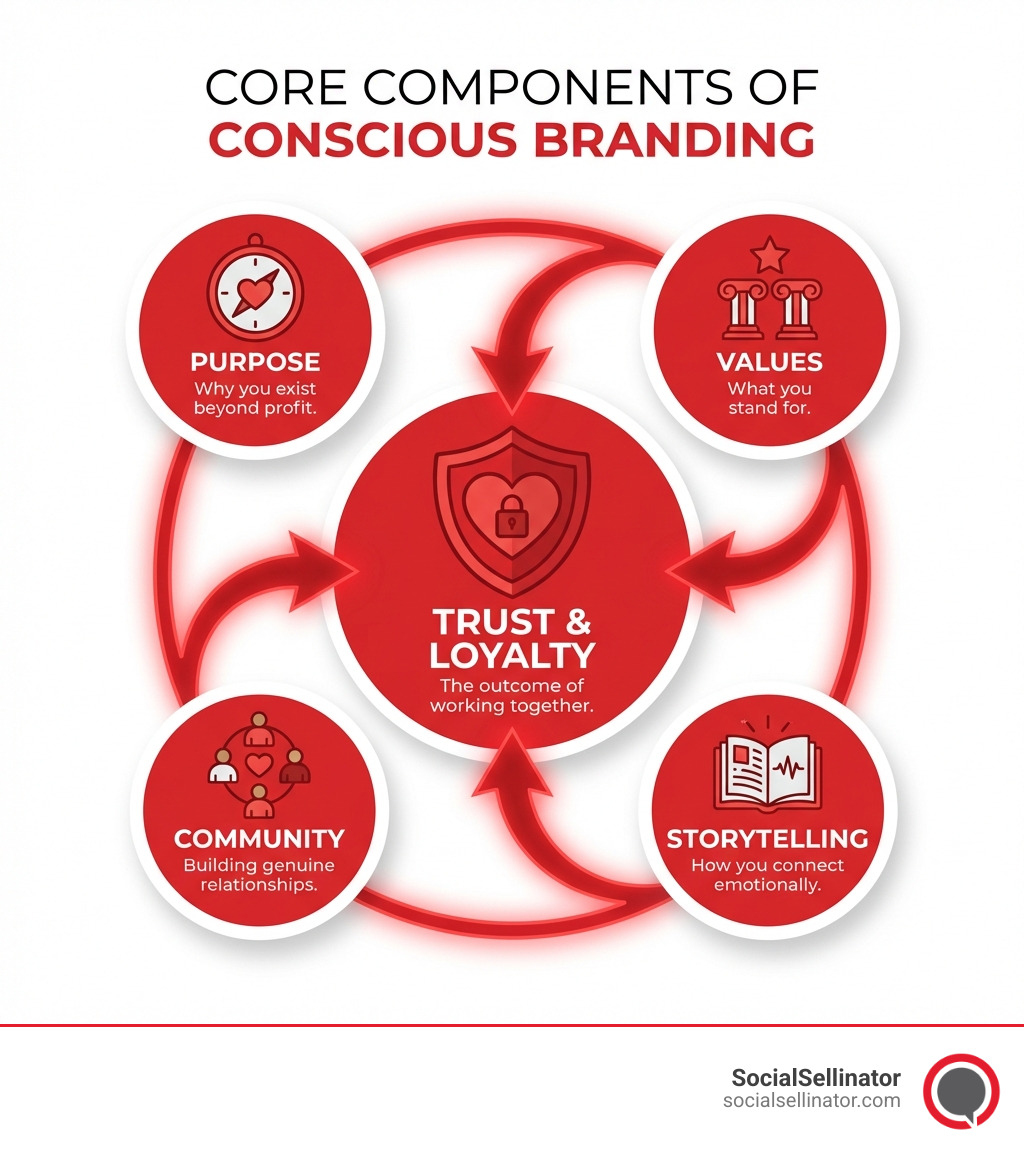
At the heart of successful branding in media lies a robust brand identity. This isn’t just a collection of design elements; it’s the soul of your business, defining who you are, what you stand for, and how you communicate. A powerful brand identity ensures recognition, fosters trust, and builds an emotional connection with your audience.
The key components to focus on when establishing or refreshing your media brand identity include:
- Visual Consistency: This encompasses your logo, color palette, typography, and imagery. These elements are the visual shorthand for your brand. Consistent application across all media channels is paramount.
- Brand Voice: This is how your brand “speaks.” Is it witty and informal, or authoritative and professional? Your voice reflects your brand’s personality.
- Brand Storytelling: The narrative that explains your origins, mission, and how you help your audience. A compelling story humanizes your brand.
- Core Values: The guiding principles that dictate your brand’s actions and decisions. These values resonate with your audience and build community.
- Mission Statement: A clear, concise declaration of your brand’s purpose beyond just making a profit.
When agencies like SocialSellinator work on brand messaging, digital marketing strategy, or social media management, these are the fundamental building blocks that guide every content decision, ad creative, and on-page SEO optimization.
Crafting Your Brand Voice and Compelling Story
Your brand’s voice is its personality put into words. It determines the tone of voice you use in your social media posts, website copy, ad campaigns, and customer interactions. Is your brand adventurous or pragmatic? Playful or serious? Defining this personality helps create authenticity, which is crucial for connecting with today’s savvy consumers.
A compelling brand story goes beyond simply listing features and benefits. It’s about creating an emotional connection with your audience. It answers the “why” behind your brand, sharing your journey, challenges, and aspirations:
- Why did your company start?
- What problem are you obsessed with solving?
- Whom do you champion, and what do you stand against?
When your story is clear, your content marketing, SEO-focused blog posts, and social media updates can all reinforce the same narrative. That alignment is what turns casual viewers into engaged followers and, eventually, loyal customers.
Ensuring Visual and Message Consistency
Consistency is the golden rule of branding in media. Because 90% of consumers expect a similar experience with a brand across all marketing channels, any deviation can signal disorganization or a lack of clarity, eroding trust and recognition.
This is where a comprehensive brand style guide becomes indispensable. A style guide is your brand’s blueprint, outlining every visual and communicative element. It typically includes:
- Logo Usage: Clear rules on acceptable versions (e.g., color vs. monochrome, print vs. digital formats), minimum sizing, and clear space.
- Color Palette: Primary and secondary colors, their codes for digital and print use, along with guidance on their emotional impact and appropriate use.
- Typography: Defined fonts for headlines, body text, and accents, including sizing, hierarchy, and spacing. This helps convey your brand’s personality—serif fonts for tradition, sans-serif for modernity.
- Imagery: Guidelines for photography style, illustration, icons, and video, ensuring a consistent visual aesthetic.
- Voice and Tone: Detailed descriptions of your brand’s personality, vocabulary, and specific phrases to use or avoid.
For SocialSellinator and similar digital marketing partners, having this clarity accelerates everything—from designing paid social ads and PPC landing pages to drafting SEO-optimized articles and email sequences. Everyone works from the same playbook, which keeps your brand cohesive no matter how many channels or campaigns you run.
Strategic Implementation of Branding in Media
Once your core brand identity is firmly established, the next step is its strategic implementation across various media channels. This is where your brand comes to life, engaging your audience and driving growth. A thoughtful approach integrates your brand seamlessly into every digital touchpoint, from content creation and search engine optimization to social media profiles and paid campaigns.
Leveraging Social Media for Brand Growth
Social media platforms are often the first touchpoint consumers have with a brand, making them critical for branding in media. Selecting the right platforms is paramount: your B2B buyers might be on LinkedIn and X, while younger or more visual audiences may prefer Instagram, TikTok, or YouTube.
A robust content strategy is key here. A helpful starting point is an 80/20 rule: about 80% of your content should provide value, entertain, or inform, while roughly 20% directly promotes your products or services. This builds goodwill and positions your brand as a helpful resource rather than just a salesperson.
Here are engaging content types to consider:
- Short-form video: Reels, TikToks, and YouTube Shorts are consistently among the most engaging formats.
- User-generated content (UGC): Encouraging your audience to create content featuring your brand.
- Interactive polls and quizzes: Directly engaging your audience and gathering insights.
- Behind-the-scenes glimpses: Showing the human side of your brand.
- Educational infographics and tutorials: Providing value and demonstrating expertise.
Effective community building through active engagement and social listening is vital. Responding to comments, participating in relevant conversations, and addressing feedback builds loyalty. With a high percentage of consumers buying from brands they follow on social media, your presence here directly influences revenue. Agencies like SocialSellinator often pair social content calendars with analytics dashboards, SEO insights, and PPC remarketing to make every post part of a broader growth engine.
The Power of Partnerships and User-Generated Content
In modern branding in media, you don’t have to go it alone. Collaborations and partnerships can significantly amplify your brand’s reach and credibility.
- Influencer and creator collaborations: Partnering with individuals whose audiences align with your target demographic can introduce your brand to new segments and improve your credibility, as these voices are often seen as more relatable and trustworthy.
- Strategic brand partnerships: Collaborating with complementary businesses on co-created content, webinars, or joint campaigns can help you reach overlapping but distinct audiences.
- User-generated content (UGC): Research consistently shows that UGC is widely trusted by consumers. Encouraging your customers to share their experiences with your product or service—through hashtags, contests, or customer spotlights—creates authentic social proof.
For a digital marketing agency like SocialSellinator, integrating these tactics might include setting up UGC workflows, creating landing pages to feature community stories, and running targeted PPC or paid social campaigns to boost high-performing collaborative content.
Overcoming Challenges in Cross-Channel Branding in Media
Maintaining brand consistency across various media channels is a significant challenge. The digital landscape is fragmented, with each platform having its own format, audience expectations, and algorithmic nuances. This can lead to difficulties in:
- Maintaining consistency: Ensuring the same brand voice, visual style, and messaging appear everywhere, from a short-form video on TikTok to a detailed article on LinkedIn or your blog.
- Adapting to different platform formats: Tailoring content to fit the conventions of each channel without diluting the core brand message.
- Resource allocation: Managing the time, budget, and personnel needed to create and distribute diverse content consistently across multiple platforms.
To address these challenges, consider a structured approach to brand governance supported by smart tools and processes:
- Comprehensive brand guidelines: As discussed earlier, a detailed style guide is your first line of defense against inconsistency.
- Centralized asset libraries: Organize all approved logos, images, videos, and templates so teams aren’t reinventing the wheel for every campaign.
- Communication guidelines: Establish clear protocols for how your team interacts with the audience on each platform, defining tone, response times, and escalation paths.
- Content calendars and approval workflows: Planning content in advance and having a clear approval process helps ensure everything published aligns with brand standards and campaign objectives.
- Integrated analytics: Connect insights from SEO, PPC, social media, and web analytics so you can see how each channel contributes to brand visibility and conversions.
By implementing these strategies, businesses can ensure their branding in media remains cohesive and impactful, even as channels, formats, and algorithms continue to evolve.
Measuring and Sustaining Your Media Branding Efforts
Building a strong brand is an ongoing journey, not a destination. To ensure your branding in media efforts are effective and lead to long-term success, you must continuously measure their impact and adapt to emerging trends. This cyclical process of analysis, adjustment, and innovation is vital for fostering enduring customer loyalty. As a Digital Branding Agency and provider of Brand Strategy Consulting, we understand the importance of this continuous feedback loop.
Using Analytics to Measure Success and Inform Strategy
How do you know if your media branding is actually working? The answer lies in data. By leveraging analytics, we can gain a deeper understanding of your customers—who they are, what they prefer, what drives their decisions, and what content resonates most with them.
Key Performance Indicators (KPIs) are your compass for measuring success:
- Brand Awareness Metrics: Track reach (how many unique users saw your content), impressions (total views), and brand mentions (how often your brand is talked about). Tools for brand awareness on social media are invaluable here.
- Engagement Rates: Monitor likes, shares, comments, clicks, and saved posts. High engagement indicates your content is resonating.
- Audience Perception and Sentiment Analysis: Use tools to gauge the emotional tone of conversations about your brand. Are people talking positively, negatively, or neutrally? This provides invaluable feedback on how your brand is perceived.
- Website Traffic and Conversions: Effective branding should drive people to your owned properties and encourage desired actions.
Regularly analyzing these metrics allows for data-driven decisions, enabling us to identify what’s working, what needs adjustment, and how to optimize future strategies. For example, if short-form video consistently shows higher engagement, we might allocate more resources to that content type.
Building and Sustaining Long-Term Brand Loyalty
The ultimate goal of branding in media is not just to attract customers, but to keep them. Long-term customer loyalty and brand affinity are built on a foundation of consistent value, positive experiences, and genuine connection.
Here’s how we help businesses foster lasting loyalty:
- Consistent Value Delivery: Continually provide content, products, and services that meet or exceed customer expectations.
- Community Engagement: Actively build and nurture a community around your brand. Respond to feedback, celebrate your customers, and create opportunities for them to connect with each other and your brand.
- Personalized Experiences: Use data to tailor communications and offers, making customers feel seen and valued.
- Authenticity and Transparency: Stay true to your core values and mission. Be honest and transparent in your communications, especially when addressing challenges.
By focusing on these aspects, your brand can move beyond transactional relationships to emotional connections, leading to customers who not only buy from you but also become advocates for your brand. This is a crucial element of successful brand awareness campaigns.
Emerging Trends for Branding in Media
The digital landscape is constantly shifting, and successful branding in media requires continuous adaptation. Here are some emerging trends we’re seeing:
- AI in Branding: Artificial intelligence is revolutionizing content creation, personalization, and customer service. AI can help analyze vast amounts of data to inform messaging, automate content generation, and provide hyper-personalized experiences.
- Augmented Reality (AR): AR offers immersive brand experiences, allowing customers to virtually try on products, visualize furniture in their homes, or interact with branded filters on social media.
- Short-form Video Dominance: As highlighted in our research, short-form video remains the most engaging content on social media. Brands must master platforms like TikTok and Instagram Reels to capture attention.
- Hyper-personalization: Beyond basic segmentation, brands are using advanced data to deliver custom content, offers, and experiences to individual consumers at scale.
- Social Commerce: The integration of e-commerce directly within social media platforms is making the path from findy to purchase seamless. Brands need to optimize their social profiles for direct sales.
Staying ahead of these trends and continuously experimenting is key. Our expertise in enhancing brand visibility in the NYC digital space and other major markets means we’re constantly evaluating and integrating these innovations into our strategies.
Conclusion: Your Brand is Your Promise
In today’s dynamic digital world, branding in media is far more than a marketing tactic; it’s the very heartbeat of your business. It’s about consciously building a brand with heart, one that resonates deeply with your audience and stands for something meaningful.
The key takeaways are clear: authenticity is non-negotiable, consistency across all channels is paramount, and a value-driven branding approach will always win over fleeting trends. Your brand experience, from the first impression to ongoing loyalty, is a promise you make to your customers. Delivering on that promise consistently, transparently, and with genuine care is what transforms casual followers into dedicated advocates.
At SocialSellinator, we specialize in helping businesses like yours steer this complex landscape. We provide innovative, customizable solutions designed to boost your visibility, increase your bottom line, and maximize your ROI. Our comprehensive approach to digital marketing, including SEO, social media management, content creation, and analytics, ensures your branding in media is not just present, but powerful. We work with you to craft a compelling brand story, maintain visual and message consistency, and leverage the latest digital trends to achieve measurable results. Get in touch today to find out why SocialSellinator is the perfect choice for your digital marketing needs, and let us help you pave the way for business growth as a branding and digital marketing agency.
Headquartered in San Jose, in the heart of Silicon Valley and the San Francisco Bay Area, SocialSellinator proudly provides top-tier digital marketing, SEO, PPC, social media management, and content creation services to B2B and B2C SMB companies. While serving businesses across the U.S., SocialSellinator specializes in supporting clients in key cities, including Austin, Boston, Charlotte, Chicago, Dallas, Denver, Kansas City, Los Angeles, New York, Portland, San Diego, San Francisco, and Washington, D.C.