
The Ultimate Guide to LinkedIn Brand Awareness and Marketing Success
Why Your Personal Brand on LinkedIn is Your Most Valuable Professional Asset
Image metadata:
- Title: Header image illustrating LinkedIn brand building
- Alt text: Header image illustrating LinkedIn brand building with professional network icons
- Caption: Building visibility and trust on LinkedIn for long-term opportunity
- Creator: SocialSellinator Design Team
- Format: JPG
LinkedIn brand building is the strategic process of establishing and nurturing your professional reputation on the world’s largest business networking platform. It’s not about immediate sales; it’s about playing the long game. A striking reality of modern business is that most of your target B2B buyers don’t need your product today, but they will in the future. The goal is to achieve “mental availability”—the state of being the first name that comes to mind when a need arises. By consistently providing value, you embed your brand in the memory of your network, ensuring you are the default choice when they are ready to make a decision.
Your personal brand is your professional reputation. It’s what people think of when they hear your name and what they say about you when you’re not in the room. LinkedIn is the primary stage where this reputation is built, shaped, and leveraged. The core purpose goes beyond vanity metrics; it’s about establishing thought leadership, creating inbound opportunities, and positioning yourself for career advancement.
This leads to the Visibility Paradox: When you’re invisible, you chase opportunities. When you’re visible, opportunities chase you. This isn’t just a clever phrase; it’s a fundamental shift in your professional life. Instead of spending hours searching for jobs or clients, you’ll find your inbox filled with inquiries, collaboration requests, and speaking invitations. Successful professionals use consistent brand building to transform from hunters into magnets, attracting the right connections and career prospects effortlessly.
A strong LinkedIn brand requires a strategic approach centered on several key components:
- Profile Optimization: A professional headshot, compelling headline, and detailed About section that tells your story.
- Content Strategy: Sharing valuable insights, industry expertise, and personal experiences that resonate with your target audience.
- Network Engagement: Connecting with industry leaders and participating in meaningful conversations to build relationships.
- Consistency & Authenticity: Regular interaction and sharing your genuine professional story to build authority and trust over time.
The Foundation: Optimizing Your Profile for Maximum Impact
Think of your LinkedIn profile as your digital storefront. It’s the foundation of your LinkedIn brand building efforts, working for you 24/7 to make a powerful first impression. A strategic profile doesn’t just list your history; it tells a compelling story about who you are, what you stand for, and the value you offer. At SocialSellinator, we know that just like a well-crafted digital marketing campaign, a strategic profile is essential for attracting your ideal audience.
Crafting Your Digital Handshake: Profile Picture, Banner, and Headline
Your profile’s visual elements set the tone before anyone reads a word.
Your profile picture is your digital first impression. Invest in a professional headshot with good lighting, a neutral background, and a genuine smile. It should be clear and approachable, making people feel they could easily start a conversation with you. Avoid distracting backgrounds or casual photos.
The banner space is prime real estate. Don’t leave it with LinkedIn’s generic blue background. Create a custom banner that reinforces your brand, showcases your areas of expertise, lists your core services, or features a tagline that captures your unique value. This simple touch makes your profile look polished, intentional, and professional.
Your headline is your one-line elevator pitch. Go beyond your job title. Instead of “Marketing Manager,” try something like “Helping B2B SaaS Companies Drive Growth Through Strategic Content Marketing & SEO.” Or instead of “Sales Representative,” use “Connecting Innovative Tech Solutions with Businesses to Solve Complex Problems.” The second version in each case immediately communicates the value you provide and to whom.
Activating Creator Mode is a game-changer for serious brand builders. It signals to the platform and your audience that you’re a content creator, makes your “Follow” button more prominent, and gives you access to advanced tools like LinkedIn Live and LinkedIn Newsletter to further build your community. It also allows you to list up to five topics you talk about, which act as hashtags to improve your discoverability. Also, don’t forget to customize your LinkedIn URL to something clean and professional, such as one that includes your full name, for a memorable touch.
Telling Your Story: The About, Featured, and Experience Sections
Once you’ve caught their attention, your story needs to keep them engaged.
Your About section is where personality meets professionalism. Write it in the first person, as if you’re having a conversation. Structure it for impact: start with a strong hook, state your mission and who you help, detail your areas of expertise with specific examples, and end with a clear call-to-action. Share a brief story about your professional journey, what drives your passion, and the types of problems you love to solve. People connect with authentic stories, not dry corporate biographies.
The Featured section is your professional highlight reel. Use this space to showcase your best work: articles you’ve written, projects you’re proud of, links to podcasts you’ve been on, or posts that sparked great conversations. It’s your portfolio, proving you can walk the walk and providing tangible evidence of your expertise.
Transform your Experience section from a task list into a story of achievements. Instead of listing responsibilities, focus on accomplishments. Use action verbs and quantify your results whenever possible. For example, “Managed social media” becomes “Grew social media following by 150% and increased engagement by 85% through strategic content planning and community management.” Each role should demonstrate a clear pattern of growth and expertise, telling a cohesive story of your career progression.
Building Credibility with Skills, Endorsements, and Recommendations
Social proof is the secret sauce that makes a profile magnetic. People want to see that others vouch for your expertise.
Skills and endorsements offer quick credibility. List at least 10 relevant skills you want to be known for, and pin your top three. Endorsements from colleagues act as mini-testimonials. The system is often reciprocal; endorsing others for their skills can encourage them to return the favor.
Recommendations are pure gold for your brand. These detailed testimonials from colleagues, clients, or managers carry serious weight. Be proactive and request them, making it easy for the person by reminding them of specific projects you worked on together. A few well-crafted recommendations can be more valuable than dozens of endorsements. Also, remember to pay it forward by writing thoughtful recommendations for others, which shows you’re a supportive member of your professional community.
The Content Engine: A Strategic Approach to LinkedIn Brand Building
With a polished profile, the next step in LinkedIn brand building is becoming an impactful content creator. This requires a smart, structured approach we call the Authority Acceleration Framework. It’s designed to help you deliver immense value, creating a “Value Exchange Asymmetry” where you give generously and receive even more in return through connections and opportunities. This framework consists of three crucial layers.
Layer 1: Defining Your Strategic Foundation
Before you write anything, you need clarity. This foundation ensures your content is purposeful and effective.
- Audience Clarity: Who are you trying to reach? Understand their professional struggles, goals, and aspirations to create content that resonates deeply.
- Problem Specificity: What specific problems do you solve? Your content should directly address these pain points with insightful solutions and frameworks.
- Niche Selection: Don’t try to be everything to everyone. Find your sweet spot—a topic you’re passionate about and an audience you want to serve—and aim to dominate that area.
- Unique Positioning Statement: Why are you uniquely qualified to solve these problems? Your content should subtly reinforce what makes your perspective different and valuable.
- Desired Outcomes: What do you want to achieve? Whether it’s inbound leads, speaking gigs, or career growth, defining your goals makes your content a powerful business asset.
Layer 2: Designing Your Content Architecture
This layer is about what you’ll talk about and how you’ll present it engagingly.
- Content Pillars: These are the 3-5 main themes you’ll consistently create content around, aligned with your niche and expertise.
- Narrative Arc: Take your audience on a journey. Each post should build on the last, establishing your authority and helping your audience grow.
- Authority Builders: These are specific content types designed to showcase your deep expertise, providing “aha moments” for your audience.
- Content Mix: Keep things fresh with a variety of formats, including text posts, articles, videos, and visually appealing carousels.
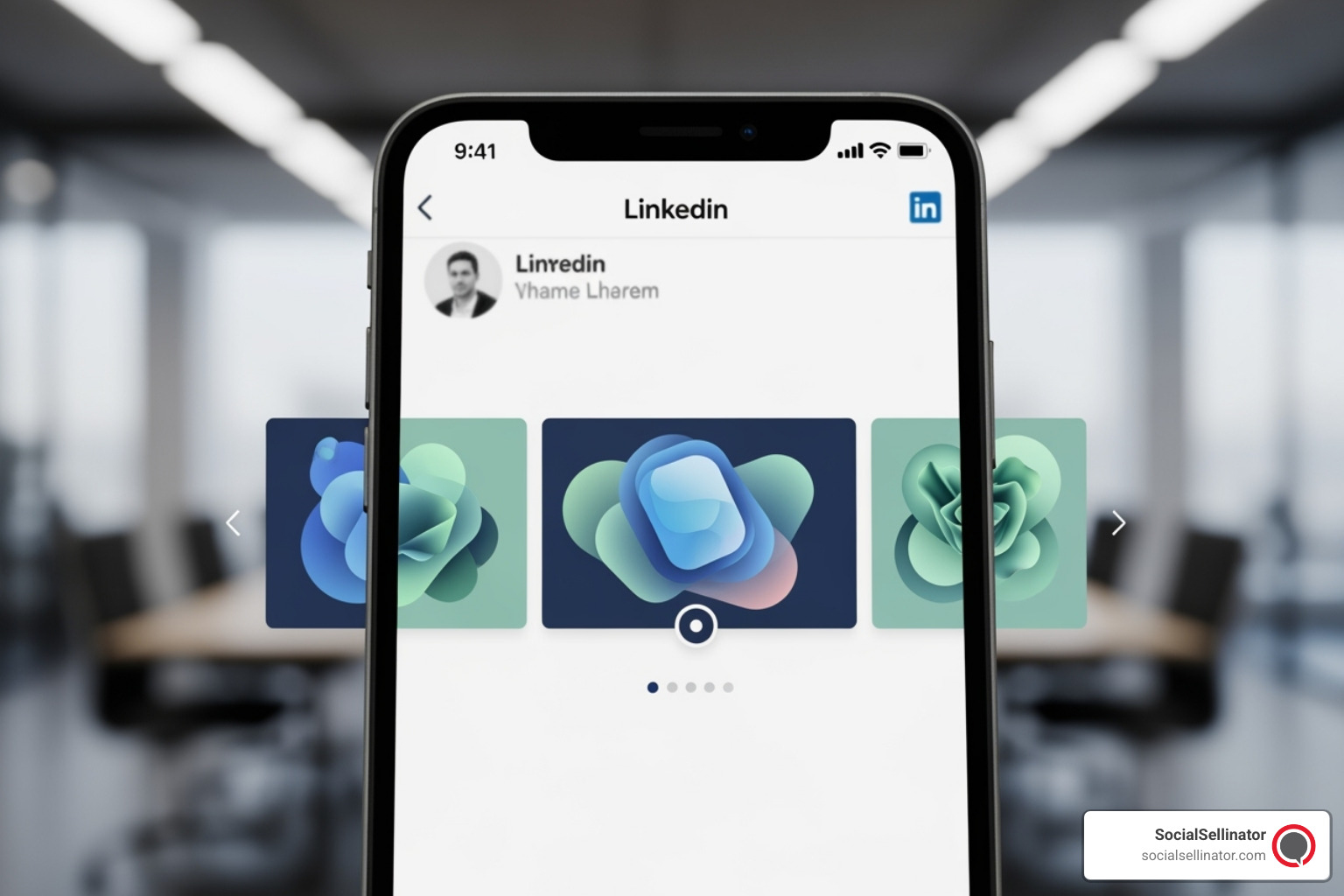
Image metadata:
- Title: LinkedIn content carousel example for brand building
- Alt text: Illustrative LinkedIn content carousel showing step-by-step tips for brand building
- Caption: Visual content formats like carousels can boost engagement and clarity
- Creator: SocialSellinator Design Team
- Format: JPG
Here are 12 effective LinkedIn post types to inspire your content strategy:
- Experiments: Share a real-life test you ran, including your hypothesis, the process, and the actual outcome.
- Industry Changes: Discuss new developments in your field, offering your predictions on their impact.
- Mistakes: Be transparent about a professional blunder, what it cost you, and the lesson you learned. This builds trust.
- Successes: Detail a proud achievement and the steps you took to get there, inspiring others with your win.
- Prioritization: Explain your framework for deciding what to focus on and why it works for you.
- Trade-offs: Discuss a tough professional choice you made, outlining the options and your reasoning.
- Formulas: Condense complex knowledge into a simple, easy-to-follow formula for success.
- Templates: Share a useful template you’ve created that simplifies a common task for others in your field.
- Tools: Highlight your favorite professional tools, especially lesser-known ones that give you an edge.
- Audits: Share an audit of something in your niche (like a website or ad campaign), detailing your process and findings.
- Contrarian Opinions: Share a well-reasoned belief that goes against the grain in your industry. This showcases deep thinking.
- Book Summaries: Provide key takeaways from an impactful book, helping your network absorb valuable insights.
Layer 3: Mastering Systematic Execution and Engagement
This is where planning turns into consistent action.
- Consistency Compounding: Showing up regularly multiplies your authority over time. Like compound interest in finance, each consistent action builds on the last, creating exponential growth in your authority and reach. It’s not about posting daily, but about predictable activity that builds trust.
- Content Creation Systems: Use systems like content batching or scheduling tools to maintain consistency. As digital marketing experts, our SocialSellinator team leverages automation to streamline content creation and ensure messages reach audiences at optimal times.
- Distribution Strategy: Post when your audience is most active to maximize reach. Analyze your audience analytics to find the best times.
- Engage with Others: Leave thoughtful comments on posts from industry leaders to boost your visibility. Don’t just say “great post.” Add a related insight, ask a clarifying question, or share a brief, relevant experience. This adds value and makes you memorable. Join relevant LinkedIn groups to contribute to discussions and share your expertise.
- Respond to Comments: Reply to every comment on your posts, especially within the first few hours. This builds relationships and signals to the LinkedIn algorithm that your content is engaging, which can significantly boost its reach.
Personal vs. Company Brands: Tailoring Your Strategy
On LinkedIn, you can build a brand for an individual or a company. While both aim to increase influence, they require different strategies. Understanding this distinction is crucial for effective LinkedIn brand building. Think of it this way: your personal brand is your unique fingerprint, while your company’s brand is the collective handshake of the entire organization.
Strategies for Personal LinkedIn Brand Building
Your personal brand is a blend of your skills, experiences, and values. The secret ingredient is authenticity. People connect with people, not job titles. Your brand shines when you share your genuine self and unique perspective.
This is best achieved through personal storytelling. Share your professional journey—the wins, the lessons, and the challenges. This vulnerability creates a powerful connection with your audience. Focus on showcasing your individual expertise to position yourself as a go-to expert in your niche. Finally, actively work on building a personal network. Nurture relationships by connecting with individuals and engaging thoughtfully with their content to build your professional tribe.
Strategies for Company Brand Building on LinkedIn
A company brand represents the collective identity and values of an organization. The key here is maintaining a unified brand voice. Consistency in messaging, tone, and design builds recognition and trust. At SocialSellinator, our social media branding services focus on crafting this cohesive voice for our clients.
A company page is an excellent platform for showcasing company culture. Highlighting your values and the people behind the brand attracts top talent and builds a positive public image. Empowering your team through employee advocacy programs can amplify your message authentically. When employees share company news and achievements, their voices carry more weight than a corporate-only post.
Leveraging thought leadership from executives adds credibility and humanizes the brand. Finally, use your company page to announce product updates and solutions, using LinkedIn’s features to engage your audience directly with your offerings.
Here’s a quick comparison of the two branding approaches:
| Feature | Personal Brand Strategy on LinkedIn | Company Brand Strategy on LinkedIn |
|---|---|---|
| Focus | Individual expertise, career growth, personal reputation | Organizational values, products/services, culture, market position |
| Voice | Authentic, conversational, individual perspective | Professional, unified, consistent messaging |
| Content | Personal stories, career insights, opinions, lessons learned | Industry news, company updates, case studies, employee features |
| Goals | Inbound opportunities, career advancement, personal influence | Brand awareness, lead generation, talent acquisition, sales |
| Measure | Profile views, content engagement, follower growth | Page followers, impressions, website traffic, lead conversions |
Measuring Success and Avoiding Common Pitfalls
Building a strong LinkedIn presence is a marathon, not a sprint. It requires patience, consistency, and the right tools to measure growth. Think of LinkedIn brand building as a long-term investment, much like how the comprehensive digital marketing strategies we develop at SocialSellinator help businesses track and optimize performance over time. LinkedIn provides plenty of data, but it’s crucial to focus on the metrics that translate into real opportunities.
Key Metrics to Track Your LinkedIn Branding Efforts
These are the numbers that truly matter for measuring your success.
- Profile views: This is the foot traffic to your digital storefront. A steady increase indicates your content and comments are gaining visibility.
- Follower growth: Quality trumps quantity. It’s better to have a smaller, engaged following in your industry than a large, disconnected one. Focus on consistent, targeted growth.
- Post impressions: This shows how far your content is traveling. High impressions mean the algorithm is showing your post to more people, but they are most valuable when paired with engagement.
- Engagement rate: Arguably the most important metric, this measures likes, comments, and shares. Strong engagement, especially in the first hour after posting, signals to LinkedIn that your content is valuable and should be shown to a wider audience.
- Search appearances: This shows how often your profile appears in search results for keywords related to your expertise. It’s a direct measure of your brand’s findability.
- Social Selling Index (SSI): This score from LinkedIn measures your effectiveness across four pillars. It provides a helpful benchmark for your overall activity. The pillars are: 1) Establishing your professional brand (having a complete, optimized profile), 2) Finding the right people (using search tools effectively), 3) Engaging with insights (sharing valuable content), and 4) Building relationships (strengthening your network).
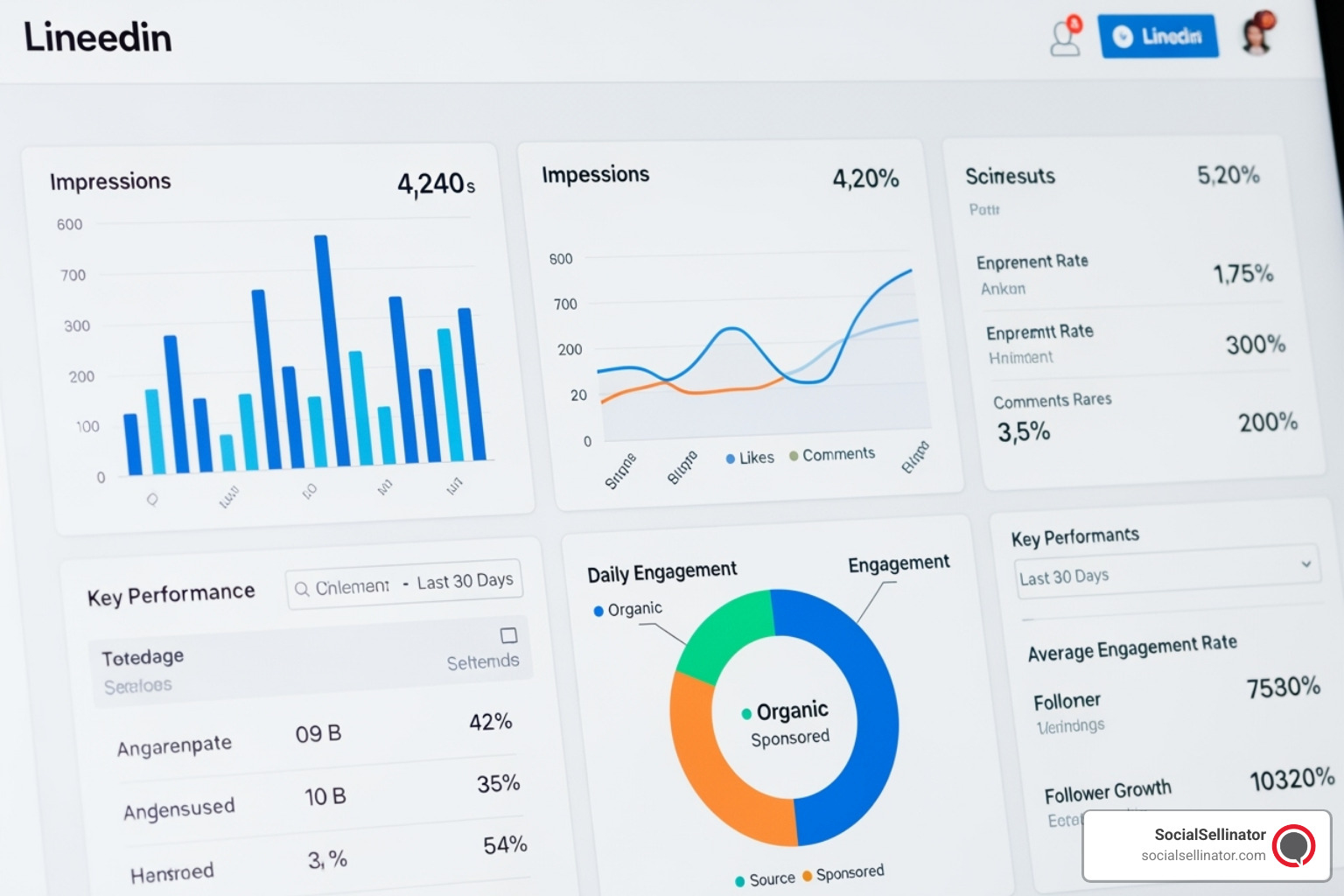
Image metadata:
- Title: LinkedIn analytics dashboard overview
- Alt text: Analytics dashboard visualization showing LinkedIn engagement metrics and growth trends
- Caption: Tracking impressions, engagement, and follower growth informs better content decisions
- Creator: SocialSellinator Design Team
- Format: JPG
Common Mistakes in LinkedIn Brand Building and How to Avoid Them
Avoid these common traps that can derail your progress.
- Inconsistency: Posting sporadically confuses your audience and kills momentum. Aim for a regular, predictable cadence.
- Being too salesy: LinkedIn is for relationship building, not constant pitching. Focus on providing value first using the 80/20 rule: 80% value, 20% promotion. Our social media management approach at SocialSellinator emphasizes this relationship-first mentality because it delivers better long-term results.
- Ignoring comments: Engagement is a two-way street. Respond to comments to build relationships and encourage future interaction.
- Lack of strategy: Random content doesn’t build a brand. Have clear content pillars and a target audience in mind.
- Generic content: If anyone could have written your post, it’s not helping you stand out. Share your unique perspective and insights.
- Chasing vanity metrics: Likes don’t pay the bills. Focus on metrics that lead to meaningful professional opportunities, like messages, connection requests with notes, and profile views from target companies.
Advanced Tactics for Career and Business Growth
Once you master the basics, leverage these features to accelerate your growth.
LinkedIn Learning is an underused tool for building credibility. Completing courses in your field and adding the certifications to your profile demonstrates a commitment to continuous learning and professional development.
For students and early-career professionals, the key is to build relationships before you need them. Use LinkedIn’s alumni search tool to find people from your school who work at companies you admire. Connect with industry leaders and engage thoughtfully with their content. A single insightful comment can lead to a conversation, an informational interview, and eventually a job offer.
The ultimate goal is to generate tangible opportunities passively. This includes inbound leads from potential clients, speaking invitations, and partnership offers. Your LinkedIn brand can also support broader digital marketing efforts by driving traffic to your website, creating a powerful synergy with SEO and content strategies. Finally, a strong brand can lead to career sponsorship, where senior professionals in your network who see your value will actively advocate for your advancement, putting your name forward for promotions and unlisted opportunities.
Conclusion: Turning Brand Awareness into Tangible Opportunities
LinkedIn brand building is more than just maintaining a profile; it’s a long-term strategy for shaping your professional reputation. The journey boils down to three core principles: creating a profile that shines, sharing a consistent stream of valuable content, and engaging authentically with your network.
When you commit to this process, you fundamentally change how opportunities find you. Instead of chasing leads and connections, you begin to attract them. This investment pays dividends in the form of inbound leads, accelerated career growth, valuable partnerships, and a reputation as a go-to expert in your field. You shift from hunting for chances to becoming a magnet for them, ensuring you are top-of-mind when the right opportunities arise.
Headquartered in San Jose, in the heart of Silicon Valley and the San Francisco Bay Area, SocialSellinator proudly provides top-tier digital marketing, SEO, PPC, social media management, and content creation services to B2B and B2C SMB companies. While serving businesses across the U.S., SocialSellinator specializes in supporting clients in key cities, including Austin, Boston, Charlotte, Chicago, Dallas, Denver, Kansas City, Los Angeles, New York, Portland, San Diego, San Francisco, and Washington, D.C.
- About the Author
- Latest Posts

Claude Prevost is the Marketing Director at Social Sellinator, bringing over 20 years of digital marketing expertise to help businesses increase their digital footprint. Specializing in Google Ads, SEO, and LLM optimization, he is a Google Certified Professional who has successfully driven growth for over 200 companies. Discover more of his insights at Social Sellinator or explore his complete blog archive.


